

Sabbath meditations
Sabbath activities for families who need rest, not another checklist
Choose 40 low-prep Christian Sabbath activities for families by energy, age, weather, worship, mercy, and rest, with free printable activity cards.
- Detail
- 8-page PDF
- Detail
- Print friendly
- Detail
- Free · no email
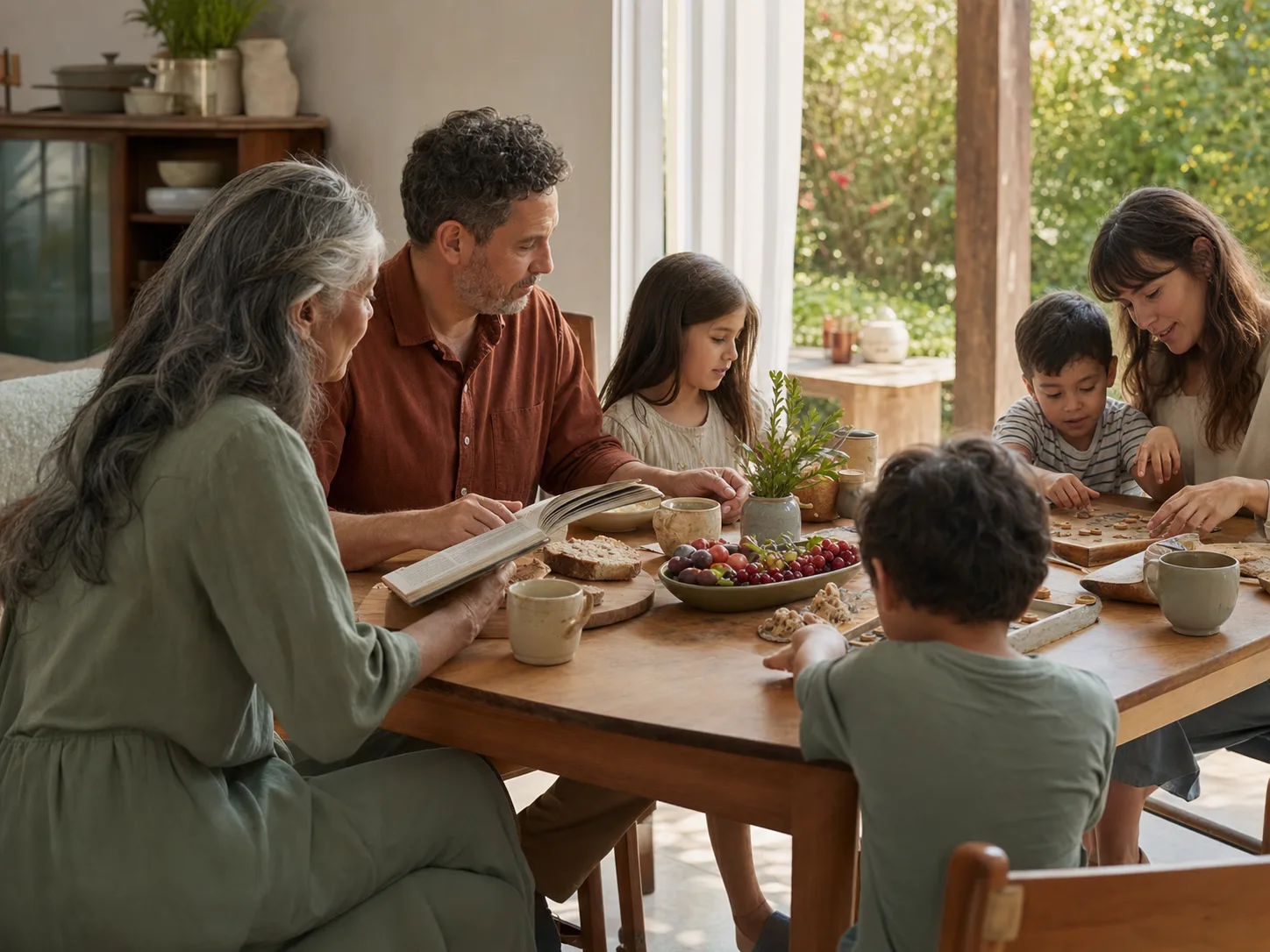
Here are forty Sabbath activities for families, dealt out as a deck you can actually choose from: eight ways to begin, eight for the weeks when everyone is exhausted, eight outdoors, eight to make and talk over, and eight for worship and mercy. Every card carries its own preparation time, who it suits, and how to adapt it. Choose two or three, print the cards if you want them on the table, and let the rest go.
The deck
Forty cards, five suits
Deal out two or three, not forty. Every card names its preparation, who it suits, and one way to adapt it, so a tired adult never has to invent the accommodation.
Mark the beginning
8 cards
One small crossing from ordinary work into received time.
Mark the beginning
Light one candle
Light a candle together and pray one sentence: “God, this time belongs to you. Thank you for bringing us here.”
- Prep
- No prep
- For
- Any age
Adapt: Use a battery candle or a lamp if an open flame is not safe.
Mark the beginning
Break bread together
Share bread or a favorite simple snack, and let each person name one good thing from the week.
- Prep
- 5 minutes
- For
- Any age
Adapt: Any food everyone can eat works; nobody has to speak to take part.
Mark the beginning
Put the work away
Place phones, laptops, and homework in one basket for an agreed stretch of time, then close the lid together.
- Prep
- No prep
- For
- Any age
Adapt: Keep one phone out for care needs and say so plainly.
Mark the beginning
Sing one song
Sing a hymn or play one worship song the family already knows, and let people join, hum, or simply listen.
- Prep
- No prep
- For
- Any age
Adapt: Lower the volume or offer headphones for sound sensitivity.
Mark the beginning
Read the rest story
Read Genesis 2:1–3 or Mark 2:23–28 aloud, then sit quietly for a few breaths before anyone comments.
- Prep
- No prep
- For
- Ages 5+
Adapt: Use a picture Bible or a short retelling for younger children.
Mark the beginning
Name what stays undone
Each person names one task they are allowed to leave unfinished until the rest is over. No fixing, no advice.
- Prep
- No prep
- For
- Ages 6+
Adapt: Write the tasks on paper if saying them aloud feels exposing.
Mark the beginning
Bless each person by name
Say to each person, “May the Lord bless you and keep you,” using their name. Include the adults.
- Prep
- No prep
- For
- Any age
Adapt: Offer a hand on the shoulder, a wave, or words only — their choice.
Mark the beginning
Walk the threshold
Take one slow lap around the block or the garden to mark the change of pace before you settle in.
- Prep
- No prep
- For
- Any age
Adapt: Stand at an open door or window if walking is not possible today.
When everyone is tired
8 cards
Low decisions, low cleanup, and no memorable outcome required.
When everyone is tired
Blanket pile and books
Pile cushions and blankets on the floor and read picture books aloud until somebody stops asking for more.
- Prep
- No prep
- For
- Any age
Adapt: Audiobooks count. Listening from another room counts too.
When everyone is tired
Listen to a Bible story
Play one short audio Bible story or psalm and let everyone listen with eyes open, closed, or busy hands.
- Prep
- No prep
- For
- Any age
Adapt: Drawing, fidgeting, and lying down are all real listening.
When everyone is tired
Long bath or foot soak
Run an unhurried bath or a bowl of warm water for feet, with no schedule attached to getting out.
- Prep
- 5 minutes
- For
- Any age
Adapt: A warm washcloth on hands and face gives the same signal.
When everyone is tired
Nap without apologizing
Someone sleeps. Everyone else keeps the house quiet on purpose. Rest is the activity, not a failure to plan one.
- Prep
- No prep
- For
- Any age
Adapt: Quiet parallel rest works when a full nap is not realistic.
When everyone is tired
Build with quiet music
Put on instrumental music and build with blocks, bricks, or magnets with no picture to copy and nothing to finish.
- Prep
- No prep
- For
- Ages 2+
Adapt: One adult can read nearby while a child builds; parallel counts.
When everyone is tired
Rewatch a loved film
Watch a film everyone already loves, then share one favorite moment each while the credits run.
- Prep
- No prep
- For
- Any age
Adapt: Leaving partway through is allowed and needs no explanation.
When everyone is tired
Eat the easy meal
Serve planned leftovers, sandwiches, or cereal on the good plates. Cooking is not the measure of a hospitable table.
- Prep
- Night before
- For
- Any age
Adapt: Accept a delivered or gifted meal without making it a project.
When everyone is tired
Sit outside with a drink
Carry warm or cold drinks to a step, balcony, or window seat and sit with no agenda for as long as it lasts.
- Prep
- 5 minutes
- For
- Any age
Adapt: An open window and a blanket do the same work in bad weather.
Outside and all weather
8 cards
Creation at whatever distance your week and bodies allow.
Outside and all weather
Take a noticing walk
Walk slowly and let each person choose the pace. Name one thing you noticed when you get home — no lesson attached.
- Prep
- No prep
- For
- Any age
Adapt: Wheels, strollers, and very short loops all work.
Outside and all weather
Watch the clouds move
Lie down or lean back for ten minutes and watch the sky change. Say nothing unless you want to.
- Prep
- No prep
- For
- Any age
Adapt: A window and a comfortable chair are enough.
Outside and all weather
Listen for five sounds
Stay still and count five different sounds around you, then thank God for one of them out loud.
- Prep
- No prep
- For
- Ages 3+
Adapt: For deaf or hard-of-hearing family members, find five moving things.
Outside and all weather
Visit water or a garden
Go to a pond, river, shoreline, or accessible garden and stay long enough to stop checking the time.
- Prep
- 15 minutes
- For
- Any age
Adapt: Check accessibility before you leave so nobody is stranded.
Outside and all weather
Sketch one plant badly
Everyone draws the same leaf, weed, or flower for five minutes. Skill is not the point and nobody grades it.
- Prep
- 5 minutes
- For
- Ages 4+
Adapt: Photograph it instead, or trace the outline with a finger.
Outside and all weather
Find the moon
Step outside or open a curtain after dark, find the moon or one star, and read Psalm 8:3–4 aloud.
- Prep
- No prep
- For
- Any age
Adapt: A photo of the night sky works on a clouded evening.
Outside and all weather
Tend one growing thing
Water, prune, or plant a single herb or houseplant together, slowly enough that a child can do most of it.
- Prep
- 5 minutes
- For
- Ages 3+
Adapt: Wiping leaves is a real job for anybody sitting down.
Outside and all weather
Short mercy walk
Take a bag and gloves and clear litter from one street or one corner of a park. Stop while it still feels good.
- Prep
- 5 minutes
- For
- Ages 5+
Adapt: Set a ten-minute limit so it stays rest, not a work shift.
Make and talk
8 cards
Attention that paid work and school usually crowd out.
Make and talk
Draw a Bible scene
Read one short story, then everyone draws the moment they remember most and shows it without explaining it.
- Prep
- 5 minutes
- For
- Ages 3+
Adapt: Collage, LEGO, or acting the scene are all valid answers.
Make and talk
Shape bread badly
Make simple bread or biscuits with forgiving expectations and let the children handle the dough properly.
- Prep
- Night before
- For
- Ages 3+
Adapt: Store-bought dough is still shared bread. Skip on low-energy weeks.
Make and talk
Tell childhood stories
Adults tell one true story from when they were the age of the youngest person in the room.
- Prep
- No prep
- For
- Any age
Adapt: Keep stories light; nobody has to disclose a hard memory.
Make and talk
Write a blessing for someone away
Write or draw a short blessing for a person who is not here, then decide together how to send it.
- Prep
- 5 minutes
- For
- Ages 4+
Adapt: A voice message counts, and so does a single sentence.
Make and talk
Make kitchen music
Use instruments, pans, or hands to play through one song together. Loud is allowed; in tune is not required.
- Prep
- No prep
- For
- Any age
Adapt: Offer ear defenders, or let someone conduct instead of play.
Make and talk
Leave a puzzle out
Start a jigsaw on a side table and let people drift past it all afternoon without anyone finishing it.
- Prep
- 5 minutes
- For
- Ages 4+
Adapt: Large-piece puzzles keep younger and older hands in the same game.
Make and talk
Look through old photos
Scroll or leaf through pictures from one year and name gifts you had forgotten you were given.
- Prep
- No prep
- For
- Any age
Adapt: Skip years that carry grief unless someone asks for them.
Make and talk
Play something cooperative
Choose a game where the family plays together rather than against each other, and let the youngest set the pace.
- Prep
- 5 minutes
- For
- Ages 4+
Adapt: Teams let a tired player share a hand instead of dropping out.
Worship and mercy
8 cards
Love of God and neighbor, kept human-sized.
Worship and mercy
Go to worship, add nothing
Attend your gathering and deliberately schedule no errands on either side of it.
- Prep
- No prep
- For
- Any age
Adapt: A livestream or a recorded service is still shared worship.
Worship and mercy
Call someone who is alone
Ring or voice-message one person who may not have spoken to anyone today. Keep it short and warm.
- Prep
- No prep
- For
- Ages 6+
Adapt: A child can add a hello without carrying the conversation.
Worship and mercy
Deliver a simple meal
Drop off food that was arranged in advance, leave it at the door if that is easier, and do not stay for thanks.
- Prep
- Night before
- For
- Any age
Adapt: Ask first. Unexpected visits are not always a kindness.
Worship and mercy
Write to a carer or teacher
Write cards to someone who quietly holds your week together, and name one specific thing they did.
- Prep
- 5 minutes
- For
- Ages 4+
Adapt: Drawing and dictating both count as writing.
Worship and mercy
Pray your street slowly
Walk or picture your road and pray one sentence for each home you pass, without needing to know their business.
- Prep
- No prep
- For
- Ages 5+
Adapt: Pray from a window seat with a map or from memory.
Worship and mercy
Visit where you are wanted
Visit someone who has said a visit is welcome, and leave before the visit becomes work for them.
- Prep
- 15 minutes
- For
- Any age
Adapt: Confirm on the day; cancel freely if anyone is unwell.
Worship and mercy
Give from the mercy jar
Empty a family jar or set aside a small amount together, and let a child help choose where it goes.
- Prep
- 5 minutes
- For
- Ages 4+
Adapt: Time or goods can replace money in any week that is tight.
Worship and mercy
Receive help without repaying
Accept a meal, a lift, or an offer of help, say thank you once, and resist the urge to balance the ledger.
- Prep
- No prep
- For
- Any age
Adapt: Say plainly what would actually help when someone asks.
Choose with a four-question filter
Before choosing, ask four questions: What energy do we actually have? Who needs accommodation? What will deepen worship, delight, connection, mercy, or rest? What preparation can we remove? Let each person nominate one card, then keep only what fits. A family may open with bread, take a nap, walk at sunset, and call that a complete Sabbath.
Pay attention to aftereffects. If an activity creates frantic preparation, conflict, spending pressure, or a large cleanup, simplify it next time. If it produces laughter, spacious conversation, embodied rest, attention to God, or generosity without resentment, it may become part of your rhythm. The deck is a menu, not an itinerary.
Begin with one cue you can repeat
A beginning ritual helps a family cross from ordinary work into received time. Keep it light enough to repeat. Choose one cue, not all eight, and let it develop meaning through familiarity. The point is not to recreate another household’s tradition but to notice that this stretch of time belongs to God and is not governed only by output.
Invite children to take a real role: light a candle with supervision, select a song, set bread on the table, or name something the family can release. If the week has been hard, the opening can include lament. Sabbath does not require everyone to arrive cheerful, and a thirty-second beginning still marks the change.
When everyone is tired, rest is the activity
Restful does not have to mean memorable enough for social media. When caregivers or children are depleted, choose cards that reduce decisions and cleanup. Rewatching a favorite film, eating an easy meal, or sitting on a step can honor creaturely limits. Ask, “What would feel like receiving today?” rather than “What impressive thing should we do?”
Make room for different nervous systems and abilities. One person may need quiet while another needs movement. Parallel rest still counts: a child builds nearby while an adult reads, or one family member naps while others listen to a story. Nobody has to be in the same room to be resting together.
Go outside at whatever distance this week allows
Creation can widen attention when the house feels cramped. You do not need a scenic destination. A sidewalk tree, cloud movement, bird call, rain pattern, or patch of soil can become an invitation to praise. Leave room for wandering instead of turning the walk into a lesson with required answers.
Adapt for mobility, weather, age, and safety. Observe from a window, visit an accessible garden, or bring a leaf and a stone indoors. Sabbath delight is not limited to athletic families or good climates, and the adaptation line on each card exists so nobody has to invent one under pressure.
Make and talk without a productivity goal
Sabbath can make room for forms of attention that paid work and school crowd out. Choose activities without an outcome. The drawing does not need to be kept, the bread need not be beautiful, and the conversation does not need to resolve every family issue before bedtime.
Avoid using forced togetherness to erase a child’s need for space. Offer two cards and allow people to join for part of the time. Connection becomes more restful when consent, age, and temperament are respected, and a teenager who reads in the same room is still with you.
Keep worship and mercy human-sized
Jesus joins Sabbath with restoration and mercy. Service can belong to Sabbath when it arises from love rather than obligation or a need to prove usefulness. Keep the act small and avoid turning every rest day into a project. Sometimes receiving care, attending worship, or praying for a neighbor is the needed act.
Ask before helping and protect people’s dignity. Children can participate in simple, appropriate ways without being made responsible for adult needs. If service becomes logistically heavy, schedule the larger work for another day and keep one small Sabbath response instead.
Adapt Sabbath for ages and seasons
Toddlers need movement, repetition, snacks, and short transitions. School-age children often enjoy meaningful roles and two concrete choices. Teenagers need ownership, privacy, and freedom from a full day of programmed family bonding. Single-parent, shift-work, caregiving, disabled, grieving, and multigenerational households may need a shorter window or divided practices.
Sabbath is a gift before it is a family aesthetic. If Sunday is a workday, choose another period. If chronic illness limits activity, receiving care can be central. If family relationships are unsafe, do not use Sabbath language to force proximity; seek wise pastoral and professional support and practice rest within safe boundaries.
End by noticing, not grading
Close with one question: “Where did you notice rest, love, beauty, or God?” Passing is allowed. Thank God for what was received and name what remains unfinished. Avoid a family scorecard. A difficult day can still teach you which expectations need to be released.
Set out one cue for next time—the cards, candle, bread recipe, or a note about what worked—then return to ordinary life. Over months, the rhythm matters more than any single activity. Let Sabbath become a recurring permission to worship, delight, receive limits, and belong to one another without earning the day.
Sources and further reading
- World English Bible
The public-domain source for Genesis 2, Sabbath passages, and the Gospel accounts referenced in the guide.
- Bible Odyssey overview of Sabbath
Historical and biblical context for Sabbath as a recurring practice within Israel’s life and Scripture.
- Theology of Work rest and work overview
A Christian framework for receiving rest without separating it from vocation, limits, and neighbor love.
Frequently asked questions
- What are good Sabbath activities for families?
- For a Christian family, choose low-prep activities that make room for worship, delight, connection, mercy, or rest: shared bread, a walk, a nap, Scripture read aloud, music, a welcoming visit, or a short act of service. Two or three are enough.
- Do Sabbath activities have to be religious?
- Christian Sabbath keeps worship and Scripture at its center, and it also receives meals, play, nature, creativity, sleep, and neighbor love as real rest. An activity’s posture and its place in the family’s week matter more than whether it looks religious.
- How do we practice Sabbath with different ages?
- Give younger children movement and simple roles, school-age children meaningful choices, and teenagers ownership and privacy. Shorten the shared window and allow parallel forms of rest rather than programming everyone all day.
- Is the activity-card printable free?
- Yes. The eight-page PDF prints all forty cards on five cut-apart sheets, plus a how-to-use page and a family selection card. It is ungated and designed for home printing.