

Bible meditation
A 7-day Bible meditation plan for slowing down with one passage at a time
Follow a simple seven-day Bible meditation plan with one passage, reflection prompts, prayer, and a free printable PDF for each day.
- Detail
- 10-page PDF
- Detail
- Print friendly
- Detail
- Free · no email
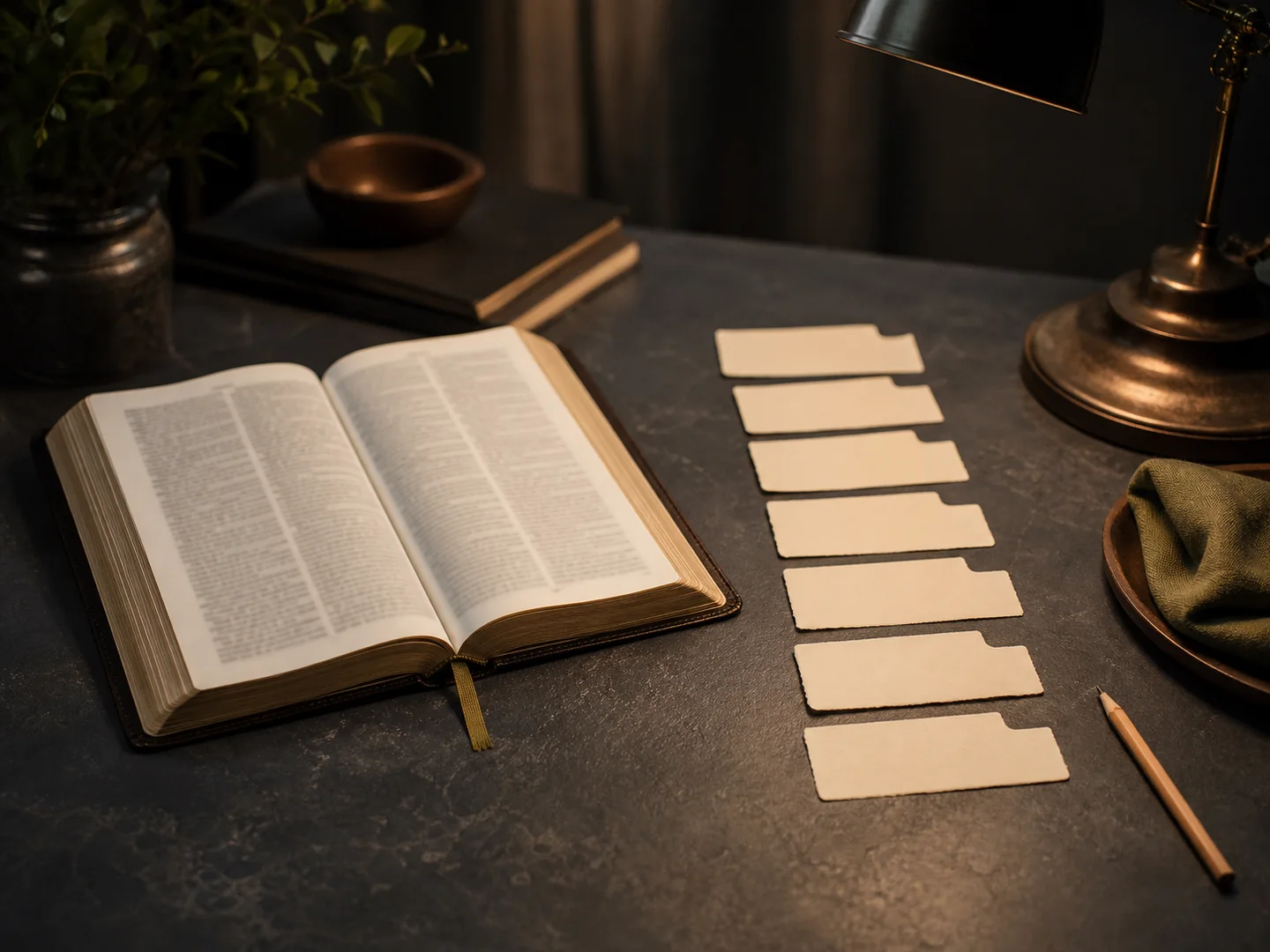
This seven-day Bible meditation plan is a small, repeatable way to move from reading Scripture quickly to receiving it prayerfully. Each day gives you one short passage, one honest question, one prayer direction, and one phrase to carry into ordinary life. You do not need prior meditation experience, special equipment, or a perfect quiet hour. Begin with five unhurried minutes and let consistency grow from there.
Seven-day practice
The complete plan
- DAY 01
Psalm 46:10
Be still
- Notice
- What changes when you remember who God is?
- Pray
- Name what you are gripping and ask for grace to release it.
- Carry
- Be still, and know.
- DAY 02
Proverbs 3:5–6
Trust
- Notice
- Where are you leaning only on your own understanding?
- Pray
- Offer God one unresolved decision.
- Carry
- Acknowledge him in this.
- DAY 03
Psalm 23:1–4
Be shepherded
- Notice
- Which shepherding image meets your present need?
- Pray
- Ask for guidance, provision, or courage by name.
- Carry
- You are with me.
- DAY 04
John 15:4–5
Abide
- Notice
- Where have you confused strain with fruitfulness?
- Pray
- Ask Jesus to teach you to remain.
- Carry
- Remain in me.
- DAY 05
Matthew 11:28–30
Receive rest
- Notice
- What burden are you carrying as if it cannot be shared?
- Pray
- Tell Jesus the weight without minimizing it.
- Carry
- Gentle and humble.
- DAY 06
Romans 12:2
Renew the mind
- Notice
- What repeated pattern is shaping your reactions?
- Pray
- Ask for one renewed way of seeing today.
- Carry
- Be transformed.
- DAY 07
Philippians 4:6–8
Practice peace
- Notice
- What is true and worthy of sustained attention?
- Pray
- Bring one concern and one gratitude before God.
- Carry
- Think on these things.
How the seven-day plan works
The plan follows the same five movements each day: read, notice, ponder, pray, and carry. Read the passage slowly enough to hear its shape. Notice a word, image, promise, or tension without trying to manufacture a dramatic insight. Ponder what the passage reveals about God and what it touches in your present life. Pray a truthful response. Finally, choose a short phrase or action to carry into the day.
Repetition is intentional. A familiar rhythm removes the pressure to invent a new devotional method every morning. The passages change, but the posture stays steady: Scripture leads, attention listens, prayer responds, and daily life becomes the place where the reading is practiced.
- Read the passage twice, aloud when possible.
- Notice before analyzing; give the text time to meet you.
- Pray what is true rather than what sounds impressive.
- Carry one phrase or one small act of obedience.
Days one through three: stillness, trust, and care
Day one begins with Psalm 46:10 and the invitation to be still before God. The aim is not to force an empty mind; it is to loosen your grip long enough to remember who God is. Day two turns to Proverbs 3:5–6. Name the decision or uncertainty you keep trying to master, then pray for a willingness to acknowledge God within it. Day three rests in Psalm 23:1–4, noticing the concrete images of shepherding, provision, guidance, and presence in a dark valley.
These opening days establish the plan's foundation. Christian meditation is not a test of concentration. It is a relational practice of returning. When your thoughts wander, come back to the passage without scolding yourself. The return itself can become prayer: 'Shepherd me here,' 'Teach me to trust,' or simply, 'You are God.'
Days four through six: abiding, rest, and renewal
Day four stays with John 15:4–5. Instead of treating spiritual life as another productivity project, consider Jesus' image of branch and vine. Ask where you have been operating as if fruit depended entirely on strain. Day five receives Matthew 11:28–30 as an invitation from Jesus, not a slogan. Name the burden honestly and listen for the gentleness described in the passage. Day six turns to Romans 12:2 and asks what pattern is shaping your reactions right now.
The middle of the week often exposes resistance: boredom, missed time, or the feeling that nothing happened. Do not chase novelty. The purpose is to let a small portion of Scripture remain near enough to question your reflexes and nourish a different response. Quiet faithfulness is a meaningful outcome even when the session feels ordinary.
Day seven: practice peace and look back
On day seven, read Philippians 4:6–8 slowly. Notice that prayer, gratitude, attention, and practice belong together. Bring one real concern before God, name one gift without pretending the concern disappeared, and choose one true or lovely thing to give sustained attention. Then review the week. Which passage returned to you on its own? Which question stayed unfinished? Where did a phrase alter one small choice?
Review is not a scorecard. It helps you recognize fruit that is quieter than a spiritual high: a softer answer, a remembered promise, a moment of restraint, or the decision to pray before reacting. Mark one passage to revisit next week rather than rushing to collect seven new ones.
Choose a five-, ten-, or twenty-minute pace
For five minutes, read twice, sit with one word, pray one sentence, and write one carry phrase. For ten minutes, add a few lines of reflection and a full minute of silence. For twenty minutes, read the surrounding paragraph, consult context after your first listening pass, and leave space for a longer prayer. The shorter version is not spiritually inferior; it is often the most honest way to build a durable practice.
Use a timer only if it helps you stop checking the clock. Keep your Bible and plan in the same visible place. If mornings are crowded, meditate at lunch or before bed. The best time is the one you can meet with reasonable attention, not the time that makes your routine look most devotional.
If you miss a day—and what comes next
Do not double the next session or restart from day one. Continue with the next passage when you return. A missed day is information about your rhythm, not a verdict on your desire for God. If the same obstacle repeats, shorten the practice, move it, or attach it to a dependable cue such as morning coffee or the end of a commute.
After the week, repeat the passage that carried the most life, or build a second week from one Psalm, one Gospel scene, one wisdom passage, and one New Testament letter. Keep the five movements. Over time, the plan should become less like a schedule you complete and more like a way of staying available to Scripture.
Sources and further reading
- World English Bible
A public-domain English Bible used for the short Scripture excerpts in the printable resources.
- BibleProject book guides
Free literary and historical overviews that help readers return from reflection to a passage's wider context.
Frequently asked questions
- What is a Bible meditation plan?
- It is a scheduled set of short passages and prompts designed for slow, prayerful attention. Unlike a plan focused mainly on covering chapters, this one stays with a small text long enough to notice, pray, and respond.
- How long should I meditate on Scripture each day?
- Five to ten attentive minutes is a good beginning. A consistent short practice is usually more useful than an ambitious routine that becomes impossible to sustain.
- Should I study the passage before meditating?
- Context matters, but begin by reading the text itself. After noticing and praying, use a trusted study Bible or book guide to test impressions and understand the surrounding argument.
- What if no word or phrase stands out?
- Choose a phrase that clearly describes God, an invitation, or a promise in the passage. Meditation does not require a surprising personal message; patient attention to what the text actually says is enough.