

Bible meditation
Five Bible meditation methods—and when each one helps
Compare five Bible meditation methods, choose one for your current need, and begin with a worked Scripture example instead of another vague technique list.
- Detail
- Complete guide
- Detail
- Free to read
- Detail
- No signup
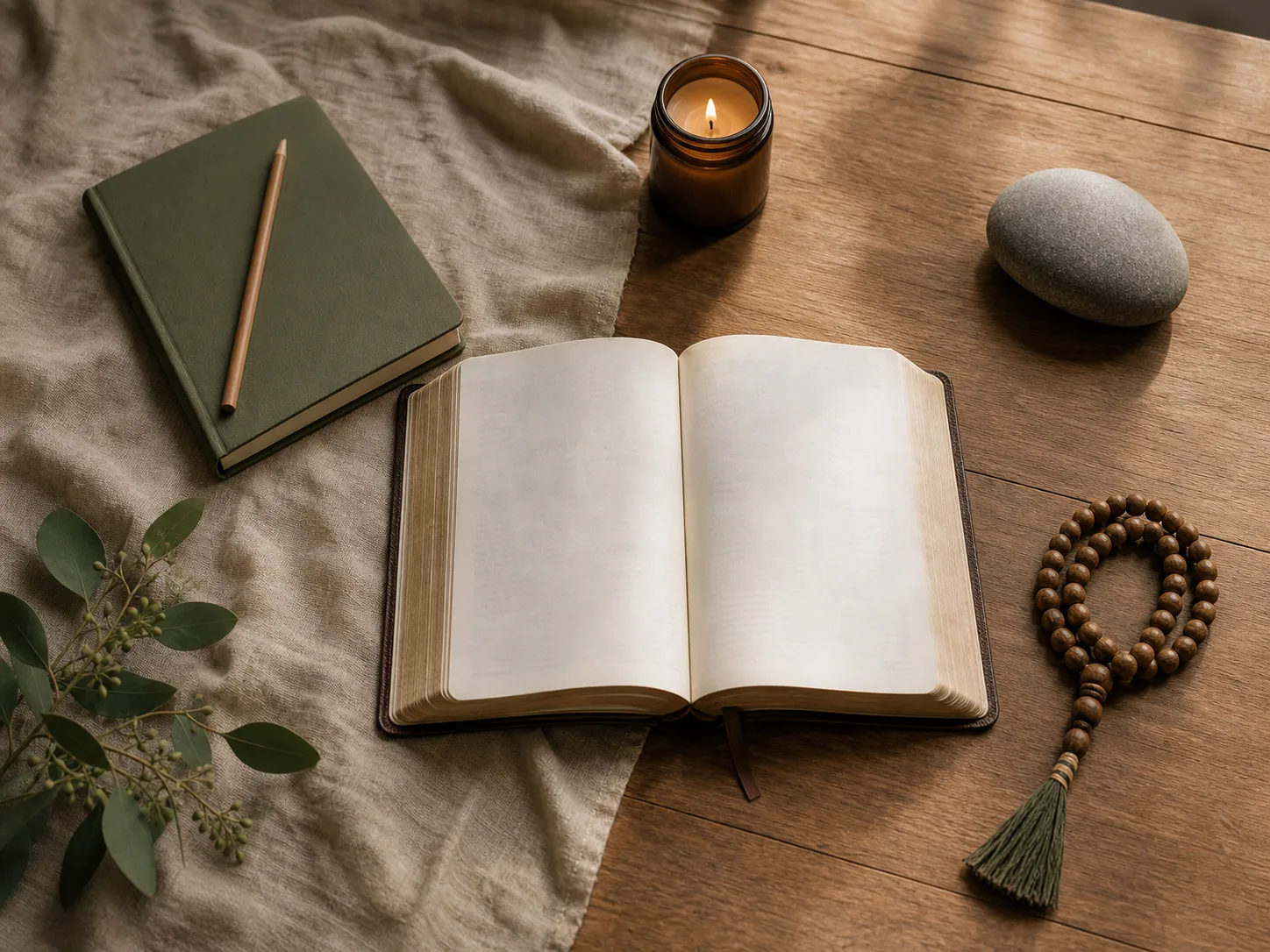
Start with what you actually need and let that pick the method. The chooser below matches five common situations to five usable Bible meditation methods, and the table underneath compares them on when to use them, what they ask of you, and what goes wrong. These are not competing tricks for producing a spiritual feeling; they are different ways of staying with a real passage long enough to understand it, pray honestly, and respond.
Choose a practice
Five Bible meditation methods
These methods overlap and can be combined, but choosing one primary job keeps the practice simple enough to use.
Start with the job, not the method
If 01
“I have never meditated on Scripture”
Use Slow repeated reading
Slow repeated reading removes every unnecessary decision. Read a short paragraph three times, summarize it in a sentence, pray one honest response.
If 02
“One phrase keeps returning to me”
Use Phrase pondering
Phrase pondering gives that word room. Ask what it contributes, what it reveals about God, and what resistance it exposes — without treating it as a code.
If 03
“I am not sure what this verse means”
Use Context first
Context-first meditation restores the paragraph and the book. Name speaker, audience, and argument before returning to the phrase.
If 04
“I read but never actually pray”
Use Lectio Divina
Lectio Divina makes the response explicit. Read, notice, answer God directly, then rest without forcing more words.
If 05
“My thoughts disappear by lunchtime”
Use Meditation journal
A journal leaves a visible trail — observation, prayer, response — short enough that you can reread a week and see the pattern.
Scroll to compare →
| Question | Slow repeated reading | Phrase pondering | Context first | Lectio Divina | Meditation journal |
|---|---|---|---|---|---|
| Best when | You need a low-friction place to begin. | One word or image keeps returning. | A familiar verse has become detached from its paragraph. | You want reading to become direct prayer. | Writing helps you notice and remember. |
| Main movement | Read the same short text several times. | Ponder the contribution of each important word. | Trace speaker, audience, scene, and argument. | Read, meditate, pray, and rest. | Record observation, prayer, and response. |
| Watch for | Rushing because the passage feels familiar. | Treating words like secret codes. | Remaining analytical and never responding. | Forcing a special message or experience. | Writing for completion instead of attention. |
| Five-minute version | Three readings, one prayer, one carry phrase. | One verse, three words, one response. | Read the paragraph and summarize its movement. | One minute for each movement, then respond. | Reference, phrase, prayer, and next step. |
Start with the job, not the method
Ask what you need from the practice before choosing its shape. If you have never meditated on Scripture, slow repeated reading removes unnecessary decisions. If a phrase already holds your attention, phrase-by-phrase pondering gives it room. If you tend to isolate verses, a context-first method restores the paragraph and book. If prayer feels disconnected from reading, Lectio Divina makes response explicit. If you learn through writing, a structured journal keeps observation, prayer, and action together.
No method makes an interpretation true merely because it felt vivid. Scripture remains the authority, and context, the wider witness of the Bible, wise community, and the character of Jesus help test what you notice. A good method slows you down without making your private impression the center of the text. Choose the smallest structure that helps you listen well today.
- New to the practice: begin with slow repeated reading.
- Stuck on one phrase: use phrase-by-phrase pondering.
- Unsure what a verse means: choose context-first meditation.
- Reading without praying: try Lectio Divina.
- Thoughts disappear quickly: use a Scripture meditation journal.
Method one: slow repeated reading
Choose a short paragraph, not a random sentence. Read it aloud once for the whole movement. Read it a second time more slowly, noticing repeated words, images, contrasts, commands, or promises. On a third reading, pause after each clause and let the actual wording remain present. Then summarize the passage in one plain sentence before turning it into prayer.
This is the best default because it requires almost no equipment and keeps attention close to the text. It works well with a psalm, a Gospel scene, or a compact paragraph from a letter. Wandering is not failure; return to the next visible word. The aim is not perfect concentration but faithful reattention.
Methods two and three: ponder a phrase or restore context
Phrase-by-phrase pondering asks what each important word contributes. With Psalm 23:1, you might stay with Lord, shepherd, my, and lack. Ask what the image meant in the psalm, what it reveals about God, what resistance it exposes, and what a truthful response could be. Do not turn every word into a hidden code. The purpose is patient attention to ordinary language.
Context-first meditation begins wider. Read the surrounding paragraph, name the speaker and audience, trace the argument or scene, and only then return to the phrase. This is especially helpful when a familiar verse has become a slogan. Context does not make prayer less personal; it gives your prayer the sturdy meaning of the passage rather than a meaning supplied by the moment.
Methods four and five: Lectio Divina or a journal
Lectio Divina moves through reading, meditation, prayer, and contemplation. Read the passage slowly, notice what holds attention, respond directly to God, and rest without forcing more words. The movements can overlap. Five quiet minutes may contain all four, while a longer practice may circle back through the text several times. The method is relational rather than a staircase to an achievement.
A journal method adds a visible trail: passage and context, phrase noticed, what the text shows about God, what it touches in you, prayer, and one response. Writing is useful when it clarifies attention; it becomes a problem when filling space replaces prayer. Keep entries short enough that you can reread them and recognize patterns over weeks rather than performing insight on the page.
Use one passage to compare the methods
Try Psalm 1:1–3 for one week. On day one, read the whole image slowly three times. On day two, ponder delight, meditate, and tree. On day three, read the whole psalm and ask how the opening contrast develops. On day four, move through Lectio Divina with one phrase. On day five, journal what the rooted tree reveals about attention, nourishment, season, and fruit.
The text stays the same so the difference comes from the lens. Notice which method helped you understand, which helped you pray, and which produced unnecessary complexity. Keep one as your ordinary practice and borrow another when the job changes. You do not need a personal system containing every method.
Common mistakes and a sustainable next step
Do not race through methods because the passage feels ordinary. Do not treat a spontaneous association as a command from God. Do not use meditation to avoid study when the text is difficult, or study to avoid prayer when the text is clear. Avoid choosing a long chapter when your available attention is five minutes. Most importantly, do not measure the practice only by calm; Scripture may comfort, confront, confuse, or send you toward repair.
Choose one method for seven sessions. Keep the same Bible, place, and approximate time if that reduces friction. End with one sentence of prayer and one action small enough to practice. After a week, review whether the method helped you remain with Scripture and carry it into life. Keep, adapt, or replace it based on that fruit.
Sources and further reading
- World English Bible
A public-domain English Bible used for the short Scripture excerpts and references in these practices.
- BibleProject book guides
Free literary and historical overviews for returning a meditation passage to its wider biblical context.
- USCCB introduction to Lectio Divina
A concise account of prayerful Scripture reading and the traditional movements of Lectio Divina.
Frequently asked questions
- What is the simplest Bible meditation method?
- Slow repeated reading is the simplest place to begin: read a short passage three times, summarize what it says, pray one honest response, and carry one phrase.
- Is Lectio Divina the only Christian method?
- No. It is one historic method among repeated Scripture reading, memorization, written reflection, imaginative Gospel prayer, phrase pondering, and other practices used in different Christian traditions.
- How is Bible meditation different from Bible study?
- Study emphasizes interpretation and understanding; meditation emphasizes sustained attention, prayer, and response. They support each other. Context protects meditation, and meditation keeps study from remaining only informational.
- How long should I try a method before changing it?
- Use it for about seven sessions unless it is distressing or clearly unhelpful. A short trial reveals more than switching methods every time a practice feels ordinary.